
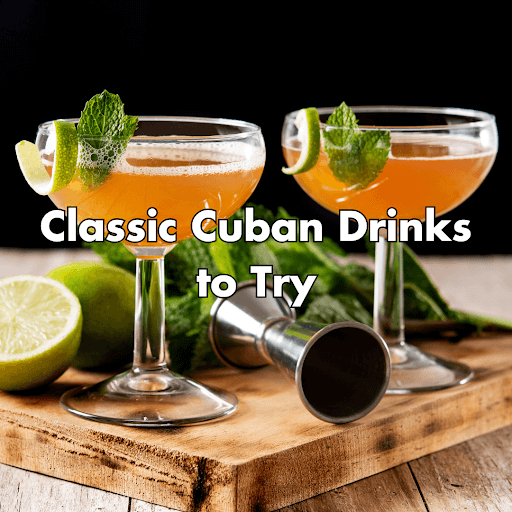
Today, we’re talking about some of my very favorite cocktails: Cuban cocktails.
They are bright, refreshing, layered, and surprisingly simple.
They rely on simple ingredients, bold citrus, and a foundation of white rum or dark rum that ties the entire family of flavors together.
If you have ever had a classic mojito on a hot day, you already know what I mean.
Over the years, I have fallen in love with the history behind these cocktails just as much as the drinks themselves.
The stories come from eastern Cuba, Havana, Santiago de Cuba, and even the influence of the United States. Many are tied to the late 19th century, the Ten Years’ War, the Cuban War of Independence, and the Spanish-American War.
They involve Cuban bartenders, sailors, soldiers, an American mining engineer, poets, presidents, and even the Rough Riders. It is a world of traditional Cuban drinks that have shaped the way we drink today.
So I wanted to break down the most popular drinks from Cuba, from the classic mojito to the classic Cuba Libre, with a few stops in between.
Some are citrus-forward, some are spirit-forward, and some lean into sweet flavors that work beautifully on hot summer days.
If you consider yourself a cocktail connoisseur, or even if you just like to mix something fun on the weekend, there is something here for you.

The Mojito: The Crowd Favorite
Whenever someone tells me they want to try a Cuban cocktail for the first time, the Cuban mojito is where I point them.
It is bright, refreshing, and one of the easiest cocktails to master. The traditional mojito uses fresh mint, mint leaves, mint sprigs, fresh lime juice, simple syrup, club soda or soda water, and a good pour of white rum.
The structure is basically the classic combination of citrus, sugar, spirit, and fizz. It is as balanced a drink as can be without ever tasting too heavy. A mojito also shows off the character of Cuban rum beautifully. Brands like Havana Club Rum helped define the modern flavor profile of this drink.
Where it Came From
Some people tie the mojito to a small village cure-all made from sugarcane juice and lime, long before it became a cocktail. Others believe early sailors adapted it into a rum drink.
I have always liked the explanation that local bartenders elevated it once rum became easier to produce in the early 20th century. No matter the route, it grew into one of the most famous Cuban cocktails.
Why I love it
There is nothing complicated here. No fancy equipment. The mojito lets your taste buds enjoy clean, fresh flavors. When you mix it right, you can taste the lime, the mint, and the rum individually.

The Daiquiri: Ernest Hemingway’s Favorite
The classic daiquiri is another cornerstone of Cuban cocktail culture. Forget the frozen version that made the rounds in New York bars in the nineties.
The true daiquiri is shaken, tart, cold, and elegant. It was reportedly created by Jennings Cox, an American mining engineer living in Cuba in the early 1900s. Its structure is simple. Fresh lime juice, sugar, and light rum are shaken hard with ice cubes.
Why Hemingway Loved it
Of all the drinks tied to famous writers, none is more iconic than the Hemingway Daiquiri. Ernest Hemingway wanted less sugar and more citrus, so bartenders adjusted the formula. His version adds grapefruit juice and a small pour of maraschino liqueur. Since he preferred strong drinks, some bartenders even served his with a little extra rum.
The result is one of the most iconic cocktail recipes to come out of Cuba. And yes, it deserves every bit of its fame.
What Makes a Daiquiri So Good
It is the balance of sour, subtle sweetness, and clean rum. If you use a good bottle of rum, you can taste the quality instantly. The daiquiri might be the most perfect rum sour ever created. I always shake it until the shaker is painfully cold.

El Presidente: An Elegant Sipper
If the mojito is casual and the daiquiri is crisp, El Presidente is the sophisticated sibling. It is made with white rum or light rum, orange liqueur, maraschino liqueur, and either dry or blanc vermouth, depending on the recipe.
El Presidente showed up in the early 20th century and quickly became one of the signature cocktails of Havana’s elite. This drink leans on complexity and tropical flair without feeling sweet.
El Presidente is a great introduction to rum drinks that lean more toward martini structure. It proves that rum can be elegant and spirit forward rather than purely fruity or easygoing.

Piña Colada: The Tropical Staple
Yes, the piña colada is technically tied to Puerto Rico, but it shares so much cultural overlap with Caribbean rum traditions that it deserves a place on this list. It combines rum, pineapple, and coconut into a creamy, tropical drink that still feels classic when made correctly.
Some Cuban bartenders adapted it using fresh pineapple and coconut water instead of cream, creating a lighter version that still brings the island energy.
The Old Cuban Cocktail: A Modern Classic
Now for a drink that looks old but is surprisingly newer. The Old Cuban cocktail was created in the United States but has deep roots in Cuban flavors. It uses dark rum, fresh mint, angostura bitters, simple syrup, fresh lime juice, and sparkling wine.
It is like a cross between a mojito and a French 75. It is balanced, aromatic, and perfect for gatherings. I reach for this one when I want Cuban flavor with a bit of glamour.
The Classic Cuba Libre: The Iconic Twist
Now we get to one of the most misunderstood drinks in the entire cocktail world. The classic Cuba Libre, also known casually as a rum and Coke with lime, is far more historic than most people realize.
It arose during the Cuban War of Independence and exploded during the Spanish-American War, when troops toasted to a free Cuba. Rough riders, journalists, soldiers, and locals all helped spread the drink’s reputation.
The structure is almost childishly simple. Straight rum or light rum, cola, and a lime wedge. But the right combination creates something bigger than the sum of its parts.
The drink represented hope, independence, and political identity. It became one of the most popular drinks in the Caribbean and later the world.
If you want variation, add a splash of lemon juice or sub in a darker cola.

Less-Known Cuban Adjacent Drinks Worth Trying
Bloody Mary with Cuban Flair
A traditional Bloody Mary technically comes from New York, but Cuban bartenders occasionally spin it by adding Worcestershire sauce, tomato juice, citrus, and even a little rum. It sounds chaotic, but it works.
Rum Cocktail Variants
Play with different combinations of Cuban rum, citrus, bitters, and herbs. You can create endless variations while staying true to Cuban flavor.
Tips and Tricks for Mixing Cuban Drinks
- Use good rum. Cuban cocktails rely heavily on the rum itself. A poor rum can ruin the drink completely.
- Use fresh ingredients. Bottled lime juice cannot replace fresh lime juice.
- Do not skip the mint. For mojitos, always use vibrant mint leaves and mint sprigs.
- Stir or shake with intention. A proper daiquiri needs a strong shake. A mojito needs gentle muddling. A Cuba Libre needs cold cola and a real lime wedge.
Frequently Asked Questions (FAQs)
Q: Why are Cuban drinks so famous?
A: Because they are refreshing, balanced, and built on flavors that work in hot climates, they also have deep roots tied to wars, politics, culture, and travel, which helped their influence spread.
Q: What rum should I use for Cuban cocktails?
A: Look for white rum or light rum for mojitos and daiquiris, and dark rum for richer drinks like the Old Cuban.
Q: How did the Cuba Libre become so iconic?
A: Its popularity came from wartime symbolism and the toast to a free Cuba during the Spanish-American War. It was simple, meaningful, and easy to replicate.
Q: Did Hemingway really love Cuban cocktails?
A: He was a major fan of the classic daiquiri and the version that eventually became the Hemingway Daiquiri. He drank them regularly while living in Cuba.
Q: Why are mojitos considered the most popular Cuban drink?
A: Because they use simple ingredients, they cool you off on hot summer days, and the flavor combination works for almost everyone.